Diving in Cozumel earns its reputation as the best in the Caribbean for three very concrete reasons: 1. Visibility of 25-30 meters almost guaranteed, 2. Huge reefs like Palancar, Santa Rosa and Columbia and 3. Drift diving so easy that the current walks you along the wall while you just enjoy. It’s the best drift diving in the Caribbean, so easy that the current does all the work and your only job is to enjoy, which is our favorite kind of sport: the one somebody else does for us 😋!
Let’s dive into the best spots and tips for diving in Cozumel!
Cozumel diving highlights
The best drift diving in the Caribbean
Why we come back to dive Cozumel year after year
Cozumel has stolen our heart, and half our memory too.
We’ve lost count of how many times we’ve been back, and every time we surface we say the same thing: next year, again. Heading off to see more of Mexico? Check out our Mexico 14-day itinerary.
The whole southwest coast is part of the Cozumel Reefs National Park, so the coral is healthy and the fish are more at ease than we are on the sofa on a Sunday.
Marine life and best time to go
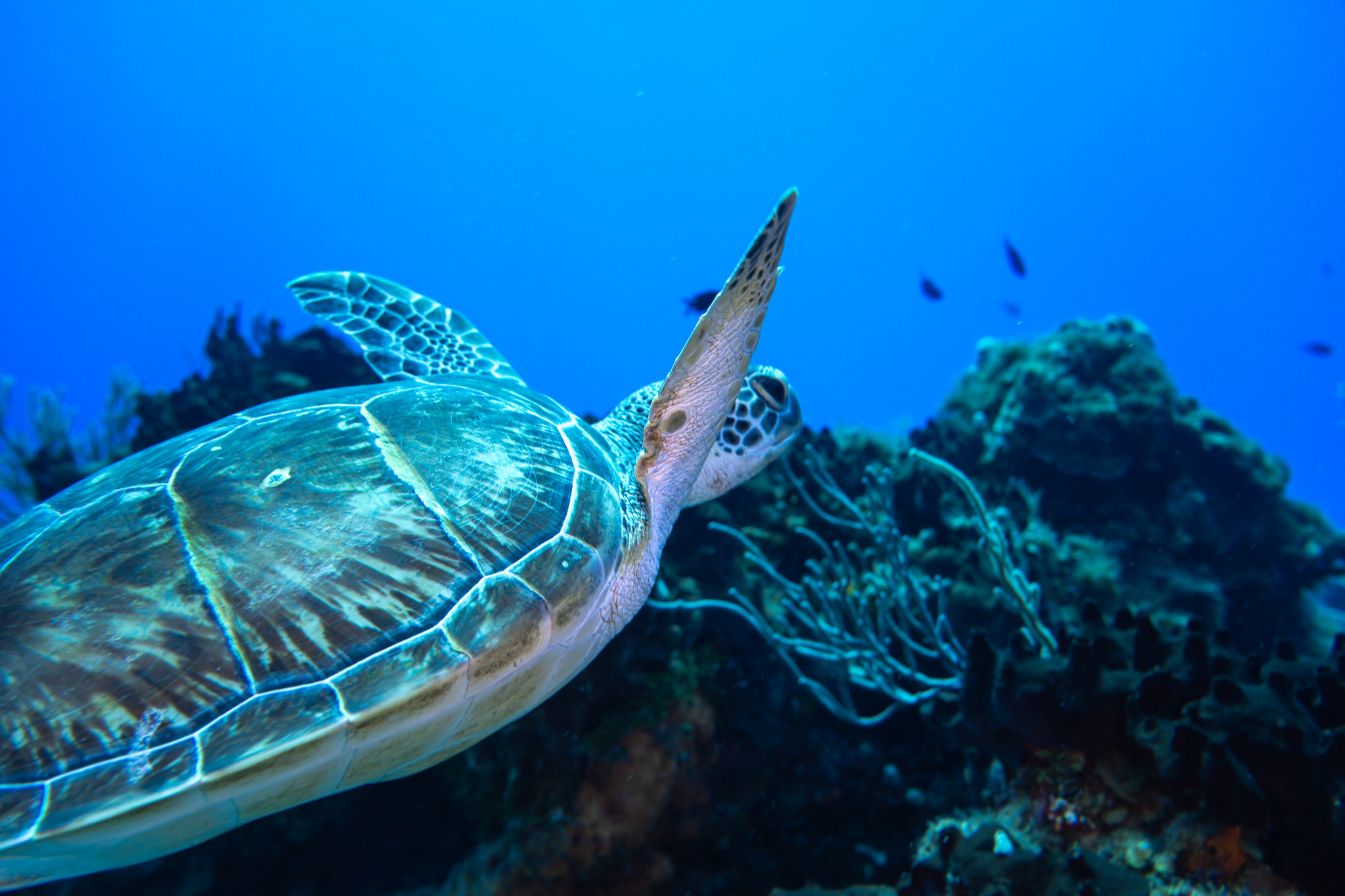
Our favorites: green turtles, eagle rays, nurse sharks, moray eels and the endemic toadfish.
On the island of Cozumel you can dive all year round, with high season from December to April.
Incredible reefs
Our favorite dive spots in Cozumel are: Palancar, Santa Rosa, Columbia, Paradise, Cedral and Punta Sur. Expect walls, caves, pinnacles and gentle drift.
All inside the Marine National Park 😉
How to get to Cozumel (and how we got around)
We arrived by ferry from Playa del Carmen: 45 minutes we spent playing expert sailors and slightly regretting breakfast. They leave almost every hour with Ultramar or Winjet, and it’s the easiest and cheapest way. If you’d rather fly, Cozumel airport (CZM) has direct flights from Mexico, the US and Canada.
Once in San Miguel, the town, everything is a stone’s throw away. We rented a scooter next to the dive center, at HTL, and explored the island at our own pace. For food we ended up several times at Burritos Gorditos, across from the center, where one burrito feeds two and a half people. Write the name down, you won’t go wrong. If you’re after a base on the island, we tell you our favourite place to sleep in central Cozumel.
When to go and what the water is like
We went in late April and got warm water and visibility so good it was almost embarrassing. High season runs from December to April (clearer water and the best time to see eagle rays in groups). If eagle rays get you the way they get us, dozens of them gather at the C-58 wreck in Cancun between November and February. From May to November there are fewer people, better prices and the water is still warm, just keep an eye on hurricane season from June to November.
The water is around 28 °C in summer and 26 °C in winter. A 3 mm wetsuit is plenty almost all year; if you get cold easily, go for 5 mm in winter. In April, with 3 mm, we were like kings.
Drift diving: how you dive in Cozumel
Here almost everything is drift diving, and the first dive left us open-mouthed (tricky with a regulator in). You jump, let yourself sink and a gentle south-to-north current carries you floating along the reef while the boat follows your bubbles. We call it our personal conveyor belt: you float, it works.
Bring your surface marker buoy (SMB) and your computer, and let the guide lead.
If you come from diving in still water, get ready to grin inside your regulator like a kid.
What you need: certification, nitrox and gear
- Certification: Open Water is enough for most spots. For the deeper ones or with more current (Santa Rosa, Punta Sur) they’ll ask for Advanced.
- Never dived before? You can do a Discover Scuba dive with an instructor and still go down to see turtles, like our friend Diego did.
- Nitrox: available at almost every center, a treat for stringing together several dives a day.
- Gear: they rent it in good condition. Bring your own computer if you have one and a GoPro, because here you’ll film more than at your own wedding.
The best dive spots in Cozumel
All the top reefs are inside the Marine Park, on the southwest of the island, so you dive in protected, crystal-clear water. Picking a favorite here is like choosing a tapa at a well-stocked bar: mission impossible. These are the ones we’ve dived ourselves and come back to every time we land on the island.
Palancar Caves
Caves, arches and an eagle ray feeding on the bottom
Depth: 12-30 m · Level: intermediate (Gardens, easy) · Don’t miss: caves, arches and eagle rays.
Palancar isn’t a reef, it’s a whole neighborhood: it splits into Gardens, Caves and Bricks. The Gardens are calm and perfect to start; Caves and Bricks step it up with a maze of caves, arches and tunnels you slip through like a secret passage. Here we froze watching an eagle ray feeding on the bottom, nosing through the sand two meters from us. There were also nurse sharks taking a nap, lobsters hiding, schools of grunts and green and yellow moray eels. And as a bonus, a turtle that appeared head-on as we came out of a cave.
Palancar means something special to us: this is where Diego dived for the first time, our friend who until that day had only been underwater in his own bathtub. He did his Discover Scuba dive with an instructor glued to him and came out of the water with a smile that wrapped around his head.
Gardens, Caves or Bricks?
- Gardens: your first time at Palancar or a first dive like Diego’s.
- Caves: caves, arches and gentle adrenaline.
- Bricks: plenty of dives under your belt and a craving for the wall.
Santa Rosa Wall
Flying along the wall
Depth: 15-40+ m · Level: advanced · Don’t miss: the wall dropping into the blue and the giant moray eels.
Santa Rosa is the wall we’re hopelessly in love with. The reef starts around 15 meters and drops vertically until it disappears into a blue so deep you’d rather look up. The current carries you glued to the edge as if you were flying, and out come giant moray eels, passing eagle rays and dozing nurse sharks. We came face to face with a huge barracuda that didn’t budge an inch. We surfaced without having kicked once and with eyes like saucers.
Who is it for?
It’s a wall dive with current, so it asks for some experience and good buoyancy. If you’re short on dives, save it for when you’ve got the hang of drift.
Columbia
A cathedral of coral
Depth: 15-30 m · Level: intermediate-advanced · Don’t miss: the coral pinnacles and the turtles.
Columbia struck us as a sunken cathedral. Towering coral pinnacles split by sand channels dropping into the deep blue, one of those places that show up on every best-dives-in-the-world list. The visibility was ridiculous and the colors stayed sharp all the way down. We wandered among coral towers while a green turtle rose to breathe beside us, in no hurry, as if it owed us a coffee. Our jaws dropped inside our masks.
Don't miss it
One of the most spectacular dives on the island. If you could only do two spots in Cozumel, this one would definitely make the cut.
Paradise
The friendliest spot (and the best break of the day)
Depth: 10-14 m · Level: beginner · Don’t miss: the turquoise water and the rays on the sand.
Paradise is the friendliest spot in Cozumel: shallow, gentle current and life everywhere, ideal for first dives or to combine with snorkeling. What we remember most is the midday break: we dropped anchor on a white-sand shallow with water so turquoise it looked photoshopped, and we jumped in to swim like kids. Rays came over to nose around the sand. With a little coffee in hand, the sun and the sand, that moment was our idea of heaven.
Ideal to start and for snorkeling
Thanks to its shallow depth and gentle current, it’s perfect if you’re doing your first dives or traveling with people who prefer snorkeling.
Cedral Pass
The laid-back all-rounder
Depth: 12-18 m · Level: all levels · Don’t miss: the fish playing with your bubbles.
Cedral Pass was our laid-back all-rounder: gentle drift, colorful coral and plenty of life without any fuss. Turtles, nurse sharks, big groupers and barracudas came out, but the star was a little group of fish that started playing with our bubbles like kids in a ball pit. We spent half the dive laughing inside our regulators.
For all levels
If you want a beautiful, stress-free dive, Cedral is a safe bet for any level.
Punta Sur (Devil's Throat)
The challenge for advanced divers
Depth: 28-40 m · Level: advanced only · Don’t miss: the Devil’s Throat tunnel.
Punta Sur is the spot you save for when you’ve stopped fearing the current. The boat ride tends to be bumpy and the main event is the Devil’s Throat, a tunnel you enter at about 28 meters and exit at 40 on the wall over the abyss. Strong, unpredictable currents, only for experienced divers. We’ve got it marked in capital letters as our next goal on the island.
Advanced only
You need an Advanced certification, experience with current and good buoyancy. It’s not a spot to start out, but it’s the dream of any diver with a few stripes.
Tips for Cozumel
The splendid toadfish and other star marine life
Cozumel has a neighbor that lives nowhere else on the planet: the splendid toadfish, endemic to the island. It’s ugly and gorgeous at the same time, hides under ledges and lets out a funny croak. We hunted for it on every dive like someone searching for their car keys in a hurry, and our divemaster pointed it out under a rock just as we were giving up.
Along with it, the island has gifted us green turtles, a loggerhead we saw for the first time here, eagle rays, nurse sharks year-round, moray eels, lobsters, boxfish and schools of tropical fish that block out the sun.
Snorkeling in Cozumel for non-divers
If you travel with people who don’t dive, they won’t be stuck toasting on a towel. The prettiest option is the tour to El Cielo (a white-sand bank full of starfish), Colombia Reef and Turtle Bay. It lasts 4 to 5 hours and runs around 45 USD per person.
The other option is for them to hop on the same dive boat and snorkel with a deckhand in the water with them while you go down. We set it up that way and met up between dives: a group plan for the win.
Responsible diving: the Marine Park rules
Cozumel protects its reef tooth and nail, and it shows. To keep it this beautiful:
- Biodegradable (reef-safe) sunscreen, or better, a rash guard. The usual cream stays at the hotel.
- Look, don’t touch: don’t touch or lean on the coral, and don’t chase the wildlife.
- Good buoyancy: in drift it’s easy to get too close without meaning to.
- Marine Park permit: it’s usually included in the dive (they give you a wristband).
We always dive with Aguaclara Diving
Our dive center in Cozumel: Aguaclara Diving (a perfect 10)
If you’re going to dive in Cozumel, we’ll tell you straight: do it with Aguaclara Diving.
We’ve been diving with them for years and we always come back.
The owner, Eyal, couldn’t be a nicer guy, and he’s an instructor with over 15 years’ experience and a cave diver. Diving with him are Joni, a Basque guide who knows every hole in the reef, and Lola, a divemaster and biologist who spots creatures where we only saw sand.
They have their own boat, serve homemade taco-style food on board (they’re known for it on the island), stop at a white-sand beach and, the detail that won us over, they have great specialty coffee at the dive center before heading out.
Their reviews speak for themselves (top 1% on TripAdvisor): personal attention, lots of safety and zero tourist nonsense. The 2-dive tour costs 145 USD with gear, Marine Park permits, transport, fast boat and food included. The shop is a 5-minute walk from the ferry terminal.
We’ll be back, for sure. And if you want to try them, I´ll leave here below their contact details: