
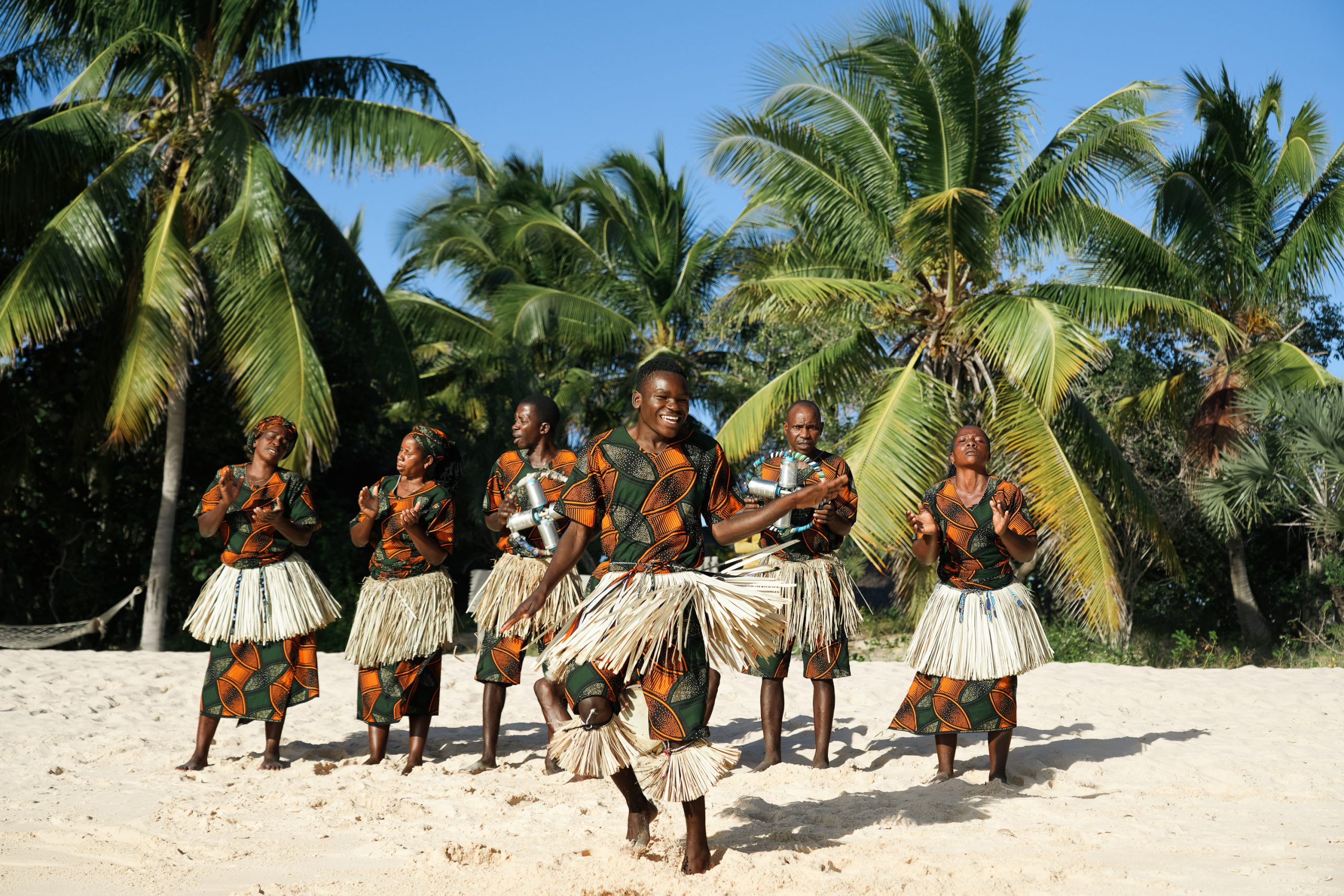
We spent six nights on an island most people have never heard of, and we loved it so much we’d go back tomorrow. Anantara Bazaruto sits inside Mozambique’s only marine national park, and it might just be the last real hidden paradise left in Africa.
Expect turtles the size of dinosaurs, your boat stopping mid-ocean because someone spotted a dugong, an afternoon adrift on a traditional dhow, a school visit that puts everything in perspective and a beach villa we’re still not over.
Quietly, this is becoming one of the planet’s best-kept honeymoon secrets. We can see why.
Almost nobody outside Mozambique knows it yet, and we’re almost sorry to be the ones changing that.
Anantara Bazaruto Island Resort
Bazaruto Island, Mozambique
By Sea or By Air
You can fly in by helicopter, fifteen minutes over turquoise water that might justify the ticket on its own.
We went the slower way, by boat from Vilanculos, it took 45 minutes where we watched the sea change colour in real time until it settled on a blue only ever seen in filters.
Paradise Starts Where the Road Ends
Here’s the thing about Bazaruto: no roads, no traffic, no queue for anything.
It’s the largest island in the archipelago and it’s still mostly sand, palm groves and dunes that climb a hundred metres before dropping straight into the Indian Ocean.
Anantara has 44 villas, and that’s the entire tourist infrastructure on this stretch of coast.
Some afternoons we walked the beach for a full hour and passed nobody at all.
The Ultimate Escape
This is the ultimate island escape, and the phrase actually earns it.
You get the wild version of Mozambique, crocodiles in the freshwater lakes inland, over 240 bird species overhead, dugongs grazing on seagrass a few minutes offshore, and then you come back to a villa with a private pool and someone who already remembers how you take your coffee.
Raw island, five-star landing.
Stars Over Bazaruto
No streetlights on the island, nothing built for miles, so the stars arrive early and they arrive in numbers.
The Milky Way sits right overhead, the whole arc of it, clear enough to make out the dark dust lanes running through it.
We ate dinner under it, walked back to the villa under it, and stopped twice on the way because it kept getting better, maybe more times.
Ask us what we brought home from Bazaruto and the sky comes up, same level as the beaches.
Simply wow
A Resort Inside Bazaruto's Marine Sanctuary
Protected Since 1971
The Bazaruto Archipelago was declared a national park in 1971, making it one of the oldest marine reserves in Africa. That’s 1,430 km² of ocean and five islands, co-managed since 2017 by African Parks alongside Mozambique’s national conservation authority.
What that means in practice: every boat trip you take from the resort happens inside protected water. Fishing is tag-and-release only, by law. And the reef here is in the shape reefs used to be in everywhere.
The Last Dugongs in Africa
Mozambique holds the last viable dugong population on the entire east coast of Africa, somewhere between 250 and 350 animals, and the waters around Bazaruto are their stronghold. In 2022 they were reclassified as critically endangered.
They’re gentle, enormous, and stranger than you’d expect: up to three metres long, 500 kilos, grazing on more than 30 kg of seagrass a day, living to around seventy. Genetically they’re closer to elephants than to dolphins.
Where Five Species of Turtle Come to Nest
All five sea turtle species found in this region nest on these islands, and it’s the only place in the Western Indian Ocean where that happens. Add 2,000-plus fish species, over 240 bird species, six kinds of dolphin, whale sharks between October and April, and humpback whales passing through from July to September.
You’re not staying near a nature reserve. You’re staying inside one.
The Honeymoon Capital Nobody Talks About Yet
The honeymoon thing genuinely surprised us. Not the romance part, that’s easy to spot the second we saw the place, but how many couples we crossed paths with who had chosen Bazaruto specifically.
We have later read the reviews and it’s everywhere: “a honeymoon dreams are made of”, “the most relaxing, romantic ending we could have asked for”. One guest simply titled theirs “world’s best kept secret”, we agree on that note it is a well kept secret and we get why we would come here if it was our honeymoon.
The resort is just 44 villas with enough room to go an entire day without crossing another guest if that’s the plan, with an infinity pool with its own bar and local music playing low, dinner tables set directly on the sand and our favourites the sunsets.
If you’re planning a honeymoon and want somewhere still genuinely quiet, this is where we’d send you. Come here before everybody else catches on.
Life Inside a Beach Villa With No Neighbours
Forty-four villas in total, spreading along the western shore of the island (meaning the best sunsets!) and set back into the palm grove, so we walk from your terrace to the water in about twenty steps and see almost nobody doing the same. Ours was a beach villa, and we spent six nights in it.
Our Villa
After six nights living in it, we can say it was one of the most pleasant surprises of the trip:
Over the years we have stayed in a lot of hotels and we are hard to impress on rooms. This one had us about four minutes after opening the door, and the reason is how beautiful it is.
One very large cozy bed, a sofa built for collapsing onto after a dive, a coffee machine, Bose speakers and a minibar on the house. Outside we found a veranda, a private pool and the Indian Ocean about twenty steps away, and not a single neighbour in sight.
Housekeeping came through several times a day, which we only noticed because we kept leaving wet snorkelling gear everywhere and it kept mysteriously sorting itself out.
Our favourite: the sunsets. The sun drops straight into the ocean directly ahead of your terrace. We watched it from our own veranda more than once, drink in hand, without moving a muscle. Elsewhere people hike for a view like that.
💡 If You're Travelling as a Family: The two-bedroom villas sit higher up the hillside, trading direct beach access for sweeping views across the whole property and the ocean beyond, plus a lot more room for kids. There are also Deluxe Sea View Pool Villas, larger again, with wraparound views and a private plunge pool.
What to do in Bazaruto?
Five full days, and we never repeated a single activity. That is the short version of what there is to do on Bazaruto. You can snorkel Two Mile Reef with dugongs surfacing on the way and lunch on an empty beach, sail a traditional dhow at sunset, cross the island by jeep to the freshwater lakes where the crocodiles live, sandboard down a hundred-metre dune with champagne waiting at the top, or dive sites nobody else has booked. The resort arranges all of it, and we sat down with the team on our first night to plan the week.
Private or shared Boat Snorkel Tour
· Discovering the wild beauty of the Bazaruto Archipelago ·
Sighting Africa's Last Dugongs
First stop wasn’t a reef at all. The engine cut, the captain pointed at a patch of water that looked exactly like all the other water, and said: there.
A dugong. One head, breaking the surface for a second and gone again. Then, a little further out, another. They came up one at a time over the next stretch, five or six in total, and our captain called every single one before we saw a thing. Best eyes on the archipelago.
We swam with 2 of them in Raja Ampat a while back, so we had something to compare it to, and seeing them out here in such quantity lands differently.Nobody talked much. We just watch, and it dawns on us how few people alive have seen this.
It happened again two days later on the way out to a dive, four more of them, and the boat stopped again. Between July and September the humpbacks come through these same waters too, so the captains keep one eye on the horizon the whole way. You pay for the dive, and the journey throws in a wildlife documentary for free.
Snorkelling in the Middle of the Ocean
Then out to the shallow side of Two Mile Reef, the stretch our captain called Coral Rips. No land in sight, just a boat and a reef underneath you.
The coral goes on and on, alive and in every colour, with fish stacked over it big numbers. Two turtles cruised past. A blacktip reef shark came in for a look and carried on with its morning.
And it was ours alone. No other boat, no other snorkellers, nobody else in the good bit. One of the best hours of the whole trip.
Lunch on a Beach With Nobody On It
We assumed lunch would be back at the resort. Instead the boat pulled up at a deserted beach where the dunes run down into the sea, and the crew set up a tent on the sand for two.
What came out of the cooler: lobster, king prawns, chicken, salads, fruit skewers, little chocolate cakes, cold beer. On a beach with a population of two.
We ate, walked the whole stretch of sand without meeting a soul, and got back on the boat a bit stunned. This was only day one. Wow.
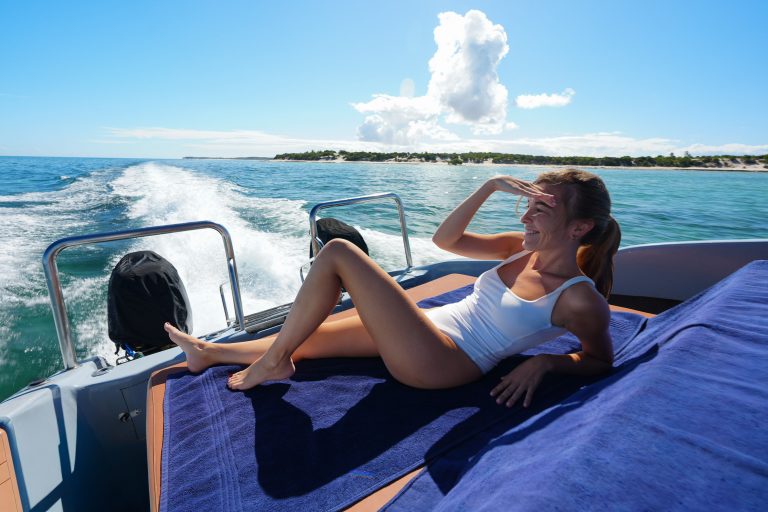


An Afternoon Aboard a Traditional Dhow
· Hotel Activity ·
We got back from the snorkel trip, showered, and went straight back out to sea. Different boat this time.
The dhow is the boat that has moved this coast for centuries: wooden hull, hand-built, sails stitched together from whatever holds the wind. Ours had sails made of plastic sheeting and it did the job beautifully. Beautiful sunset in front of us. We sat low, close to the water, and leaned into the breeze.
No engine. Nothing to shout over.
The Best Hour of Silence on the Island
This is the quietest thing we did all week, and we mean that as high praise.
Once the sail catches, the only sounds are water against wood and wind in the rigging. That’s it. No motor, no music, no other boats. The light goes gold, the island slides past on one side and the open ocean opens up on the other, and you stop having conversations because none of them improve on this.
The Bazaruto Community
The crew are local, and they’ll tell you about it if you ask, which you should.
We learned that day that around 65% of what this community lives on comes out of the water in front of you. The dhows we saw working the horizon go out every single day, not for guests, for dinner. The archipelago has roughly 6,500 residents and the sea is the economy, the pantry and the road network all at once.
From down there we saw Bazaruto the way this coast has always seen it: low, slow and at sea level.
The Walk Back
We came ashore and walked the beach towards our villa, and ran straight into a group of kids heading home from school along the sand.
They walked with us. They held our hands, told us their names, and were interested in playing and didn´t stop smiling at us the whole time.
One of the clearest memories we brought back.
The Island's Other Side: Jeep tour Inside Bazaruto
· Adventure across the land of Bazaruto·
There Are Crocodiles in the Middle of the Island
Bazaruto is not just a beach. Drive inland and the sand gives way to freshwater lakes, palm scrub and a landscape that makes you check the map twice.
Those lakes hold Nile crocodiles, and there are samango monkeys in the trees above them. We saw them, plus the suni antelope that live in the scrub, which is a genuinely strange list of animals to find on an island you reached by boat.
We went from dunes, to lakes, to bush, to village, and back out to a coastline the colour of a postcard. We’ve rarely seen that much variety packed into so little ground.


240 Bird Species Overhead
This is a birdwatching island and most guests never find out.
Over 240 species have been recorded across the archipelago, and around the lakes you get them stacked up: flamingos, herons, fish eagles, waders working the shallows. Bring binoculars if birds are your thing. Bring them anyway, because you’ll want them for the whales too.
Do the lakes route, obviously. But keep looking up on the walk back to your villa too: that’s where a bushbaby went past us on the handrail, leaping from post to post. Some of our best sightings happened on the way to bed.
The School Visit
Anantara has helped build three primary schools alongside the local government since 2018. If you have time you can ask to visit the school in the jeep tour.
We did it and we loved it.
We went in, met the teachers and spent a good while with the kids. They are not like the children we’re used to at home. They came at us with a smile so wide it took a second to process. They also sang to us and there’s something about the way they carry themselves that we’re still trying to describe properly.
The classroom is different too, it all runs on a naturalness that would be hard to reproduce anywhere in Europe. We walked out fairly convinced there’s more to learn from these kids than from most courses we’ve done. And not only how to sing.
Snowboarding on the dunes
· From turquoise waters to endless dunes ·
A Hundred Metres of Sand
Cross to the eastern side of the island and the landscape changes completely. The dunes here climb to around a hundred metres, high enough that from the top you get the whole archipelago laid out in front of you and sand in every direction behind.
They ran us up there in a vehicle late in the afternoon, just before the sunset, which is exactly the right hour to do it.
Apart from the animals, Bazaruto has two things we have not seen anywhere else in the world: the best sunsets (sorry to repeat but we were im-press-ed), and hands down the most star-filled sky of our lives.
Then They Hand You a Snowboard
And here’s the best: you go down on a board.
Turns out we were natural sandboarders. It’s a talent neither of us knew we had and neither of us will ever use again. Going down takes about ten seconds. Walking a hundred metres back up soft sand takes considerably longer, and there is no dignified way to do it.
You climb back up anyway. You do it again. You keep doing it until somebody points out that the sun is going.
Champagne at the Top
Because that’s the other half of this excursion. Waiting for us up there: champagne on ice and a spread of snacks, laid out in the sand to sit and take the moment in.
The sunsets we’d put on a postcard are the ones from the beach and from our own terrace. This one worked for other reasons: a glass in hand, an hour of throwing ourselves down a dune behind us, and nobody else up there at all.


The Spa on the Hill
· Making the most of paradise ·
The Day We Did Nothing
Halfway through the trip we gave ourselves a day off. No boat, no tanks, no vehicle. The pool in the morning, the spa in the afternoon, and nothing else on the list apart from taking pictures.
If you’re planning this many excursions, build one of these days into the middle of your stay.
Up the Hill
The Anantara Spa sits on top of a hill, which on an island this flat means panoramic. The ocean sits right below you and takes up most of what you can see, with the dunes rising behind your back.
Five treatment rooms, three of them facing the sea. There’s an ice pool, a wet room, a health bar and a relaxation area, plus a jacuzzi pavilion positioned squarely at the sunset. The Rasul Chamber, a steam and mud room, takes up to four people.
When to Book It
We went for a massage. Turns out sandboarding uses muscles we had never been formally introduced to.
The spa opens first thing and the last slot is late afternoon, so book it around your excursions instead of after them.
The Explore TV tip: If you want to continue treating your mind and body you can ask for a yoga mat. Doing sun salutations on your own terrace at six in the morning, with the ocean twenty steps away, is the best free upgrade on the property.
Where to Dive in Bazaruto, Mozambique?
The diving in Bazaruto caught us completely off guard, and we say this after a fair few dive trips: it belongs in the world top tier. Everything is oversized, the reef is in the condition reefs used to be in everywhere, and you get the sites to yourself because there are forty-four rooms on this island and nothing else. The dive centre is PADI certified and works fourteen catalogued sites across the archipelago. We did two of them, and one was really good and the other one was extraordinary. Let us take you down on each.
Two Mile Reef, Where Everything Is Oversized
We’d snorkelled Two Mile Reef the day before, so we thought we knew what was coming. Then the dive centre took us round to the ocean side, and it was different.
First thing in the water: two clownfish, playing up to the camera the way clownfish always do. Then an octopus slid out of its hole and stayed with us a while, with his posture mimicking a pointy rock.
And then the sizes started to register. We’ve dived a fair few places, and the fauna in Mozambique runs roughly double. Batfish like dinner trays. Crocodilefish, rockfish, grouper… everything scaled up.
Add healthy coral gardens, a school of triggerfish working the sand and surgeonfish everywhere you look. The water runs a touch cooler than the tropics you might be used to, so take the 5mm they offer and you’ll be perfectly comfortable.


The Dinosaur Turtles of Bazaruto
The second dive is a reason we’d get back on a plane. It’s a sandy-bottomed site off Zenguelemo, and it starts before you’re even in the water: from the boat we counted fifteen, maybe twenty turtles coming up to breathe. Twenty. You start doing the maths on what must be down there.
Visibility was not very good here because the bottom is sandy, and for a moment you wonder whether you’ve picked the right dive. We were dropped onto a meadow of seagrass, the guide started pointing off into the seagrass, and you see absolutely nothing.
Then the meadow moves.
They rise up out of the seagrass where they’ve been sleeping, one after another, ten or fifteen of them, and they are HUGE. Turtles, but nothing like any turtle we’d met before. The tail, the shell, the texture of the skin, all of it prehistoric. We nearly forgot to breathe.
Those weren’t turtles. Those were dinosaurs.
We had the whole site to ourselves, too. And we went in winter. Apparently summer is even better, which we struggle to picture.


If You Only Have Time for One Dive...
If you only have time for one dive in Bazaruto, head to Zenguelemo. We’ve seen turtles around the world, but never encountered them quite like this — the feeling when they start emerging from the grass where they’ve been hiding, is difficult to forget. This is one of those dives you’ll be talking about long after you’ve surfaced.
Tip The Explore TV
Anantara Bazaruto dining
Breakfast is, as it should be
Breakfast is at golphino, which opens at half six, and it became a small ritual. We got up at sunrise everyday just to be there early.
The spread is the full works: smoothies, pancakes, breads and pastries, ham, smoked salmon, and a chef who makes your eggs however you want them, on the spot. The coffee is specialty grade, which on a remote island is not a given.
One of us is extremely picky about breakfast and rated this one a 9.5 out of 10. You eat looking out at the pool and the ocean behind it. Hard to leave the table.


Lunch Comes Out of the Sea
Lunch is à la carte at the restaurant in front of the beach, and this is where the kitchen shows its hand: everything good here comes out of the water.
Seafood, and a lot of it. We have never eaten this much lobster in our lives, and we’ve tried before.
The main restaurant is Golfinho, there’s Clube Naval by the pool and Tartaruga on the beach for barbecue nights, and dinner moves between them depending on the weather and what the kitchen has planned. Half our dinners were buffet, half à la carte. We had the best local tastes mixed with european cuisine. The truth is that everything was excellent.


Sunset at the Pool Bar
The infinity pool has its own bar, local music playing low, and a straight line west across the water. This is where you want to be at golden hour.
While the sun dropped into the ocean in front of us, the dhows were still out there, sails up, crossing the light on their way back in. It looks staged. It isn’t, they’re just going home.
Order something cold and stay for the whole thing. Nobody is going to rush you.


Dinner by design
Then there’s the night we chose the Special dining option: Dinner by design. They set a table for just us two directly on the beach.
The food was michelin category, we had lobster obviously, which we loved but also the ceviche, the bread, and desserts that we still bring up unprompted.
And then you look up. There are no lights on this island, so you eat dinner under the Milky Way.


The Piano in the Bar
Bob Dylan stayed here. He liked Mozambique enough to write a song about it (fair enough, Bob. We felt the same way, we just lack the musical talent).
The piano he played is still standing in the main bar: It’s the work of an Italian craftsman, close to a century old, weighs something absurd, and only eight of them were ever made.
We later learned that a guest who recognised it told the staff he had managed to track down four of the eight in museums around the world. The whereabouts of the other four remained a mystery.
Turns out, one of them is here. On a tiny island in the Indian Ocean, sitting quietly in the bar of a 44-room hotel. Of all the places it could have ended up, this one feels appropriate.
Our Verdict
In our opinion Bazaruto Might Be Africa's Last Great Hidden Paradise
Is Anantara Bazaruto worth what it costs? Yes. That isn’t a sentence we hand out often.
It’s the right call if you’re planning a honeymoon somewhere still quiet, if you want a week of diving on sites nobody has queued for, or if you want a beach holiday with an entire island attached to it: reefs, lakes, dunes, villages and dhows, all a few kilometres from your villa. Six nights gave us five full days and we never repeated a single experience. It’s the wrong call if what you’re after is nightlife, shopping and a short flight.
Here’s the maths that explains this place. The national park covers 1,430 km² of protected ocean. The resort has forty-four villas, and that is essentially the entire tourist infrastructure on this stretch of coast. That ratio is why the reef is still in the shape reefs used to be in everywhere, why the turtles are the size of dinosaurs, and why you can walk the sand for an hour and pass nobody at all.
We really valued the team, every single person we dealt with was warm, willing and quick to smile, from Charles at check-in to the captain who spotted every dugong before we did. Whatever we asked for, somebody found a way to make it happen. They knew how we took our coffee by the second morning and which dive we’d loved by the third.
One last thing, and we say it as a favour to our readers, but don’t spread the secret. Bazaruto is still early. The people are starting to arrive, the word is starting to travel, and in five years this will not be a secret. Go while it still feels like one.
We’re leaving the resort’s contact details below, in case you want to enjoy this paradise:

- Web: https://www.anantara.com/en/bazaruto-island
- Email: bazaruto@anantara.com
Before You Go: What You Need to Know About Bazaruto
How do you get to Bazaruto Island?
Fly to Vilanculos (VNX) on the Mozambican mainland. Most routes come through Johannesburg or Maputo, and from Europe that means one long haul plus a connection. We came in via Johannesburg.
From Vilanculos you have two ways onto the island, and the resort arranges both:
- Helicopter, around fifteen minutes over the archipelago. It’s the fast option and the views alone make a case for it.
- Boat, a little over an hour across the channel. This is what we did, and watching the water change colour on the way in is part of the experience.
When to Go to Bazaruto?
The dry season runs from April to mid-November, and May is widely considered the best month of the year here: clear skies, gentle breezes, comfortable temperatures.
Pick your month by what you want to see:
- July to September: humpback whales pass through the archipelago. This is also when we went, and the turtle dive was extraordinary.
- October to April: whale shark season.
- August: the busiest stretch, filling up from the first week onwards.
- November: very quiet, right before the Christmas season starts.
Evenings and early mornings are fresh, so pack a light layer for dinner on the beach. Days are for swimwear.
Tips for Anantara Bazaruto
- Getting to Bazaruto Island: fly into Vilanculos (VNX), then it’s a boat transfer of just over an hour or a fifteen-minute helicopter hop, both arranged by the resort. There’s no dock on the island, so you step off into shallow water and onto the sand.
- Plan the whole week on your first night. We sat down with the team over dinner and mapped out every excursion, which is how we fitted five full days of activities into six nights. Leave it until day three and the best slots are gone.
- The best time to visit is April to mid-November, the dry season, and May is widely considered the pick of the year. July to September brings the humpback whales, October to April is whale shark season.
- Take the 5 mm wetsuit the dive centre offers. The water here runs cooler than the tropics you may be used to, and a cold diver cuts the dive short.
- Book the spa between excursions, not after them. It opens first thing and the last slot is late afternoon. Ask for a yoga mat while you’re up there: they let you take it back to the villa, and sun salutations on your own terrace at six in the morning is the best free upgrade on the property.
- Bring binoculars and one light layer. Over 240 bird species across the archipelago, plus whales on the horizon from July to September. Evenings and early mornings are fresh, days are for swimwear.
- Ask to visit the school. Anantara has helped build three primary schools alongside the local government since 2018, and a visit can be arranged if you have a morning free. It was one of the best hours of our week.
- Dugong sightings are never guaranteed, but the odds here are the best on the East African coast. Go out early, when the sea is calm, and trust your captain: ours called every single one before we saw a thing.
Is Mozambique easy to combine with a South Africa safari?
Most people who come this far combine Mozambique with South Africa or Bostwana, and it’s an easy pairing: you’re already connecting through Johannesburg.


