We did this Yucatan road trip in March 2024. Fourteen days self-driving from Cancun down to Tulum, hopping over to Bacalar, north to Holbox island, then closing the loop through Chichen Itza and Merida. We landed at 4pm with a compact Yaris booked on Discover Cars (USD 20/day) and the reasonable doubt of whether 14 days were too many for a region that looked small on the map.
The truth is this trip runs slow, we did this trip to find peace and vacation and we found it. The days in Holbox come to mind first: no cars, no clock, and a specialty coffee every morning at Café Clandestino.
We walk you through what we did day by day, what we paid per night, which cenotes to pick and why getting to Chichen Itza at sunrise is not optional. This is the 14-day Tulum itinerary exactly as it played out for us: real hotel prices, the places we went back to and the ones we would not.
Enjoy, Mexico is one hell of a destination!
Contents
14-day Yucatan guide
Our experience in Yucatan in 14 days: from Cancun to Merida via Tulum, Bacalar and Holbox. Maya ruins, cenotes, turquoise lagoons and Caribbean beaches without the crowds.
-
1. Cancun 3 days
Cancun Centro (not the Hotel Zone) is the gateway. 50% cheaper, cochinita pibil tacos at USD 1.50 and real local life at Parque de las Palapas. One night is enough before heading down to Tulum.
-
2. Tulum 2-3 days
Coastal town with Maya ruins overlooking the Caribbean, cenotes 15 minutes away and the best base for days 3 to 5. Gran Cenote, Dos Ojos and Calavera are must-dos.
-
3. Bacalar 2-3 days
The discovery of the trip. Lagoon of Seven Colours, a stromatolite ecosystem unique in the world. Zero cruise ships, kayak in the morning and catamaran in the afternoon.
-
4. Holbox 2 days
Car-free island on the northern tip. Whale shark season June-September, pink flamingos year round, bioluminescence at Punta Coco. Three nights.
-
5. Merida and Chichen Itza 2 days
Chichen Itza entering at 8 am, before the buses. Colonial Merida with Paseo de Montejo and Roberto Solís's restaurants. Three nights.
Map of the 14-day Yucatan route
This map shows the full 14-day Yucatan route, with every stop and the recommended order: Cancun, Tulum, Bacalar and its seven-colour lagoon, the island of Holbox, and Merida with Chichen Itza. Use it to place each stage, plan the drives, and save it to your own Google Maps before you travel.
Highlights
Yucatan road trip: Caribbean to cenotes, our way
Tulum
Coastal town with Maya ruins overlooking the Caribbean, the world’s best cenotes 20 minutes from the centre, and white-sand beaches that need no filter. Three nights to ease into the trip.
Holbox
Car-free island on the northern tip of Yucatan. Whale shark season runs June to September, pink flamingos year round, and night-time bioluminescence at Punta Coco. We share our favourite hotel in Holbox.
our discovery
We slept one night at Uman Glamping & Cenote Tulum and it was one of those trip-defining decisions. A safari tent deep in the jungle with a private cenote 30 metres from the door.
Breakfast was tropical fruit on a wooden table under a palm roof, café de olla and Mexican-style eggs. It is not cheap (USD 93/night in shoulder season) but it is the closest we have come to sleeping inside a cenote without paying for the actual cenote-hotel, which runs around USD 400. If you go to Tulum and can only splurge one night, splurge here.
Cancun
Arrival airport and first night of the trip. Cancun Centro, not the Hotel Zone: cochinita pibil tacos for USD 1.50 and real local life at Parque de las Palapas. If you have more time, pair this with our Mexico 14-day route (Yucatan + Mexico City + Pacific coast).
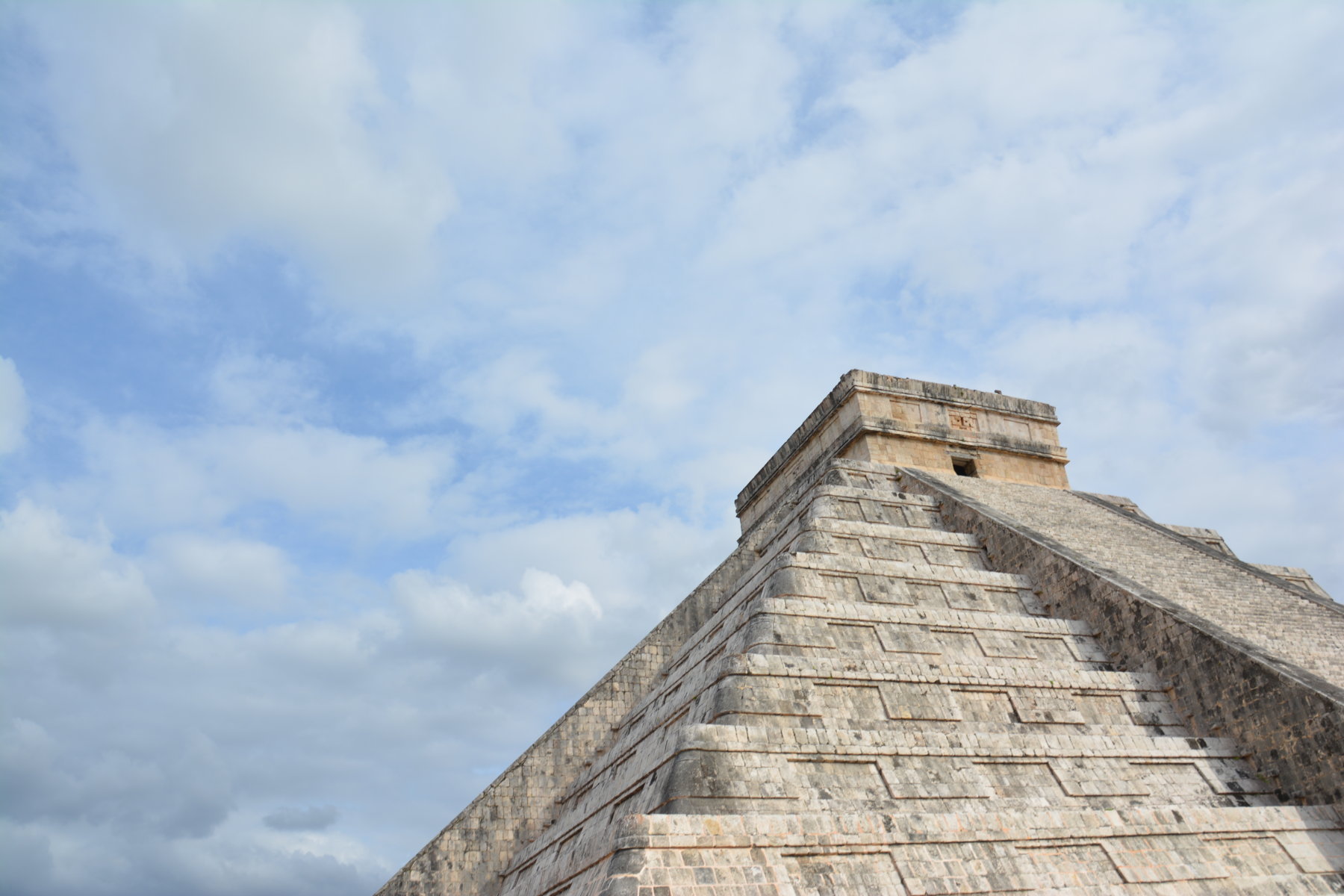
Temple of Kukulkan
Chichen Itza entering at 8 am, before the cruise tour buses. From 8 to 10 you walk the temple practically alone. By 11 it is 2,000 people.
Colonial Merida
The colonial capital of Yucatan: Paseo de Montejo, Mercado Lucas de Gálvez at dawn, and Roberto Solís’s restaurants for a poc chuc dinner.
Stop 1. Cancun
(1 day)
Cancun is the arrival airport, not the destination. We landed at 2:30pm, picked up the car at the airport (Discover Cars with Sixt local, USD 280 for 14 days with full insurance) and rolled into Cancun Centro at 4pm. One night here, on to Tulum next morning.
Sleep in Cancun Centro, not in the Hotel Zone. We stayed at Hotel Suites Brisas on Avenida Tulum for USD 55/night. Centro is 50% cheaper than the Hotel Zone, has real food (Mercado 28 with cochinita pibil tacos at USD 1.50 each) and you are not paying for a hotel beach you will not use.
That first night we had dinner at Parque de las Palapas. Live music under palm awnings, locals on plastic chairs, two Modelo beers and a plate of pibipollos for USD 8 for the two of us. We walked back to the hotel along an Avenida Tulum lit up with neon signs. Zero gringo crowd, all local.
And if you have a spare morning before heading to Tulum, the diving in Cancun is some of the best in the Mexican Caribbean.
Our Cancun picks
Our must-dos:
- Arrive at Parque de las Palapas after 7:30 pm, when it fills with locals and the live music starts. Better than any restaurant in the Hotel Zone.
- Cochinita pibil tacos at Mercado 28: our dinner was 4 tacos + 2 aguas de jamaica for USD 6. Order at the stall with the longest queue.
- If you arrive late and have a car, book the Tulum cenotes online that same night. Some open at 8 am and are full by 10.
- Bring earplugs: sleeping on Avenida Tulum means background music until late on Fridays and Saturdays, especially in summer.
Where to stay in Cancun
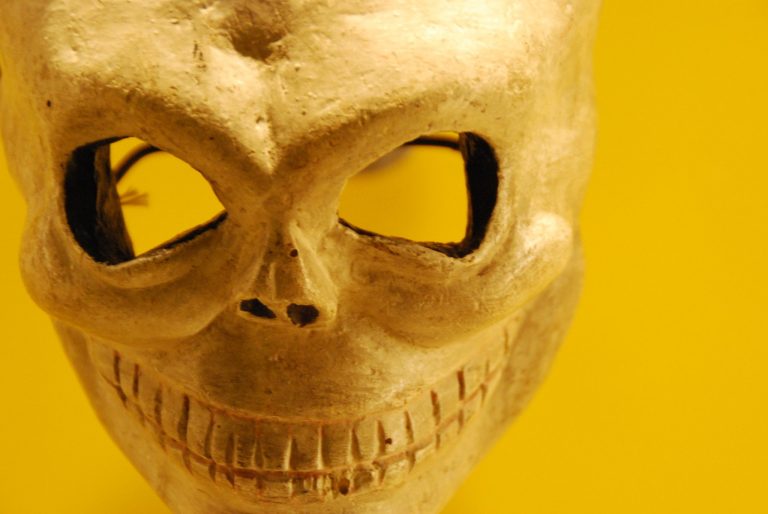
Cancun Centro, around Avenida Tulum or near Parque de las Palapas. We stayed at Hotel Suites Brisas, USD 55/night in March, a spacious room with a small kitchen and Mexican breakfast included (huevos rancheros and café de olla).
Skip the Hotel Zone. We walked through it a couple of times: massive resorts sealed off from the outside, chain restaurants and 3× prices. If you travel with kids and want all-inclusive, sure; if you want to actually travel, no. One night in the centre is enough to recover from the flight, have a homely dinner and start fresh on the road to Tulum.
Where to eat in Cancun
Mercado 28 is our taco recommendation. Tacos al pastor, cochinita pibil and beef at USD 1.50 each. Order at the stall with the longest local queue: if Mexicans are waiting, it is good.
Parque de las Palapas at night has local crowds, live music and decent street food. A marquesita filled with edam cheese and jam for USD 1 is the mandatory dessert.
For specialty coffee, any cafe on Avenida Yaxchilán. We started every morning with a latte and a concha at El Trompo, three minutes from our hotel.
Downtown seafood spots for ceviche and aguachile at lunch. La Tablita on Calle Tankah cost us USD 16 for ceviche for two with two beers.
Stop 2. Tulum
(3 days)
We left Cancun at 9am and reached Tulum in 1h45 via Highway 307. Road in good shape, no surprises, gas stations every 30 km. A quick coffee stop in Playa del Carmen and straight on to Tulum town.
Tulum is the sweet spot between Maya ruins facing the Caribbean, cenotes hidden in the jungle, and crystal-clear beaches. Three nights minimum to avoid running on a stopwatch: one for the ruins and a cenote, one for more cenotes plus the beach, one for the town at a slow pace. We did three and ran out of time — if we could redo it, we would spend one of those nights at Uman Glamping (more on that below).
The town has two sides. The main strip (Avenida Tulum) is cheap tacos, local life and affordable restaurants. The Hotel Zone, 3 km east, is jungle-chic at outrageous prices (USD 200-400/night). We slept in town and drove up at sunset for a photo and came back.
Our Tulum picks
Maya ruins at 8am sharp
The Tulum archaeological site (run by INAH) is the only Maya site with the Caribbean as backdrop. You need to be at the gate at 8am sharp: it opens at 8 and the cruise tour buses arrive by 9:30. We got there at 7:50, were the third in line and entered with barely 15 other people. Entry: MXN 95, around USD 5.
From 8 to 9 you walk the site practically alone, with iguanas sunning on the stones and the sound of the sea below. Around 9:15 we heard the first cruise group: 40 people with a guide shouting in English. By 10 we crossed three groups at once and you could no longer take a photo without crowds in the background.
Key tip we found by accident: below the cliff under El Castillo there is a hidden beach reached by a small path. We went down with swim gear in our backpacks, had 20 minutes alone in a cove with the site’s wall as a roof, and were back up before the groups arrived. The best moment of the day.
Top cenotes near Tulum
If Tulum is famous for one thing, it’s the cenotes. We did three in three days, one per morning, and each was different:
Gran Cenote (15 minutes from town by car) was the first. Half-open cavern with crystal water, snorkelling with turtles and small fish schools. We arrived at 8:30 when it opens and had the first 45 minutes almost to ourselves. By 10 there were 30 people.
Cenote Dos Ojos (20 minutes) is the best one if you dive or freedive. Huge cave system with two connected pools. We snorkelled and watched others go in with tanks to explore the dark section. Entry MXN 350.
Cenote Calavera is the oddest. Three holes to jump into from the ground: the big one is the “skull” and two small ones are the eyes. Less touristy than the others, you can spend two hours jumping without noticing time. Rope ladder down. MXN 250.
If your budget allows, one night at Uman Glamping & Cenote Tulum (~USD 93/night, safari tents with a private cenote) changes the experience. Book 3+ weeks ahead in high season. Full details in the section above.
A slow beach day
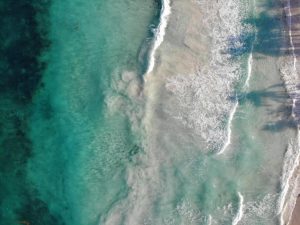
After ruins and cenotes, dedicate one afternoon to the beach without an agenda. We did it on day 3 in the afternoon. Playa Paraíso is the obvious choice: white sand, turquoise water and zero pressure if you arrive after 4pm when it empties.
Practical tip: bring water and snacks. The beach bars triple the town prices (USD 4 for a Corona) and most blast music with minimum-spend rules. We parked at the free public entrance, laid the towel 200 metres from the nearest bar and spent three hours reading and swimming.
At sunset, short plan: drive up to the Hotel Zone, 10-minute stop for a photo of the lighthouse between palms, back to town for dinner. Hotel/night: USD 93 · Food/day: USD 30 · Daily base: USD 123.
💡 Tip for the Tulum ruins: bring a hat, water and swimwear. If you can, hire a local guide at the entrance (around USD 30 for a small group, 1h). Ours was of Maya descent and told us stories of the site, of the astronomers at the Temple of the Descending God, and how the original inhabitants calculated the solstices with the angle of the sun. Changes the visit entirely.
Stop 3. Bacalar
(3 days)
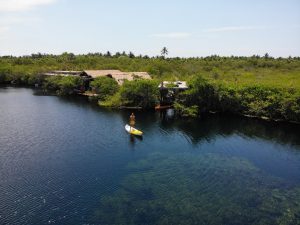
Bacalar was the discovery of this trip. We left Tulum at 9am and arrived at noon on the dot: 2h30 via Highway 307, no traffic, one stop at a roadside taqueria in Felipe Carrillo Puerto. We also stopped at Cenote Azul (3 km before Bacalar town, entry MXN 30): an open-sky cenote with 90 metres of depth, freshwater mixing with salts. Spectacular and nearly empty.
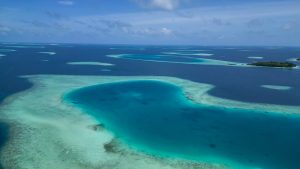
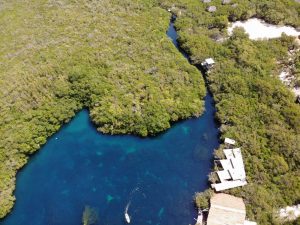
The Lagoon of Seven Colours literally shifts from turquoise to navy to jade depending on light and position. It is a freshwater stromatolite ecosystem, one of the few left in the world, and is finally drawing international attention. But it is still manageable.
Zero cruise ships, zero hotel zone, zero chains. The town is small, everything revolves around the Muelle Municipal and the Costera Sur. We spent the first afternoon walking from Muelle Municipal to Fort San Felipe and on to a seafood spot on the square. No agenda, no reservations, no clock.
Our Bacalar picks
Above all, soak in the blues
When you arrive, there it is: an expanse of water so blue it looks painted. They say it has seven colours, although our amateur eyes never counted more than three. What I can confirm is the blue changes every hour with the light: pastel turquoise at 8am, cobalt at noon, greenish jade at sunset.
Day one of three we spent exploring without a tour. Fort San Felipe is free and, against all odds, has a genuinely interesting museum about the pirates who raided Bacalar in the 17th century (worth 45 minutes). Sunset from Muelle Municipal is one of the most beautiful moments of the trip: the lagoon turns pale pink, no wind, no shouting crowds.
We had dinner at a seafood spot on the square for USD 18 for the two of us: octopus ceviche, aguachile and two Modelos. Dessert: two churros with cajeta from a corner cart.
Sailing the lagoon
Day 2 was kayak. We booked at Muelle Municipal for USD 10 half-day (2 hours, double). We pushed off at 8 to catch the lagoon flat. When there is wind it changes: small but constant chop, the kayak gets uncomfortable and your arms cook. Our recommendation: check the forecast the day before and book the kayak for calm mornings.
Day 3 we did half-day catamaran (USD 35 per person, 4 hours). Boat left at 9:30 and took us to the most spectacular spots: Canal de los Piratas with water so clear it looks like a gin and tonic glass, Cenote Cocalitos with its living stromatolites growing underwater, and Cenote de los Brujos with a brutal 70-metre drop. Three stops, three swims, coffee and biscuits between them.
Always go early, before noon. The light is better, there is no wind and the catamarans do not bump into each other.
Where to stay by the lagoon
Everything in Bacalar revolves around the lagoon, lodging included. Three options by budget:
Cabins on Costera Sur (USD 40-80/night): we stayed at Cabañas Magia, two nights at USD 75 each. Bungalow with hammock, mosquito net, bucket-shower bathroom (literal) and direct lagoon access with private dock. Breakfast was fruit and coffee in a shared palapa.
Boutique hotels in town (USD 100-200/night): if you want comfort without giving up lagoon proximity, Mía Bacalar or Casa Hormiga are proven picks. More expensive but better service.
Hostels by the plaza (USD 15-25/night): if you travel on a tight budget, dorm beds or basic doubles are available.
Book 2-3 weeks ahead, especially in high season (December-April). Hotel/night: USD 75 · Food/day: USD 25 · Daily base: USD 100.
Stop 4. Holbox
(3 days)
We left Bacalar at 8am on day 9. Ahead: 4 hours of driving to Chiquila ferry port via Highway 180. New road, no traffic, we stopped only for gas in Cancun and lunch at a taqueria in Kantunilkin.
We arrived in Chiquila at 1pm, left the car in the supervised parking at the dock (USD 5/day, we confirmed they have someone 24h) and boarded the 1:30pm ferry for USD 8 each way. 20-minute crossing and landing in Holbox.
No cars allowed on Holbox. You get around by golf-cart taxi (USD 5 per trip in town) or walking on its sandy streets. Three colours hit you on arrival: turquoise water, white sand, pink flamingos in the distance. We did nothing the first afternoon: dropped the bag at Casa Peregrino, walked to the beach, beers at Ñañas Beach at sunset, dinner in town. Three nights ahead without a clock.
Our Holbox picks
What to do in Holbox
If you travel in season (June-September), the whale shark tour is the headline activity. We did not do it because we went in March (out of window), but a friend did it in August and passed us first-hand data: USD 95 per person, 4-5 hours, early departure from the dock. Conanp regulates the daily quota of swimmers per shark to protect the population. They give you mask and fins, and you go in the water with a guide. No 100% guarantee but peak season has a 90% success rate.
Outside the whale shark window, the alternatives are solid but different:
- Flamingo lagoons at Punta Mosquito: boat tour from the dock, USD 35 per person, 2 hours. Best at sunrise with soft light and flamingos in large groups. Bring a telephoto if you shoot photos.
- Night bioluminescence at Punta Coco: moonless nights only. 1-hour tour, USD 20 per person. When you put your hands in the water, the plankton glows. Once-in-a-lifetime stuff.
- Isla Pájaros: frigate and pelican nests, 1-hour boat ride, USD 25. More for birdwatchers, but the ride compensates.
Lobster pizza? Skip it
The island’s signature dish. We tried it at two places (Roots and another near the dock) and honestly were not convinced: price-quality does not add up. A USD 30 pizza with a couple of small lobster pieces and much more mozzarella than seafood. For purists: neither is the dough Italian nor does the lobster stand out.
If curiosity wins, order at restaurants with a recent good review and share it between two to limit the damage. There are much better options at any seafood spot in town: shrimp aguachile, octopus ceviche or a solid grilled fish for half the price.
Breakfast
Clandestino has the best specialty coffee on Holbox. Roast smell hits you on entry, Chiapas beans, baristas who know what they are doing. Latte at USD 3.50, cappuccino at 3, full breakfast (huevos motuleños with beans, coffee and juice) at USD 9. Must-stop to start the day.
If Clandestino is full, Painapol is a decent alternative: fresh-pressed juices, açaí bowls, and an avocado-and-poached-egg sandwich for USD 7. Any spot in town with fresh juices and huevos motuleños works for starting the day.
Lunch
The town seafood spots are the safe bet for lunch. Fresh daily seafood, reasonable prices (USD 15-25 per person with a drink) and quick service. These are the ones we tried and went back to:
- Zoomay: excellent shrimp ceviche, quiet terrace one street back from the dock. Our favourite.
- Ñañas Beach: feet-in-the-sand beach bar, perfect for a long lunch after the beach.
- Fresco Beach Club, Hammocks Beach Club and Carolinda: three beach club options with minimum spend (USD 10-15 per person) that pays off if you stay three hours.
- Las panchas, Tamashi, Almoneda and La Tortilla: for more local, no-frills food — ceviches and aguachiles that never miss.
Dinner
At night the town is safe and walking between sand and lights is part of the experience. Our picks:
- Aluxes Rooftop: terrace overlooking the town, modern Mexican cuisine. Book ahead.
- 14: boutique Italian on a quiet side street, wood-fired pizza and fresh-made pasta. We had dinner there the second night for USD 35 for two.
- Amaité: high-end Maya cuisine in a candlelit patio. Book days in advance. Our pick for a special night.
- Luuma, Quaint Bar, Saavedra, Hot N Hot and The Beach Hideaway: all decent, unpretentious options where you will not go wrong.
Always reserve in high season. In summer the best spots fill up by 7pm.
Desserts
To wrap the night, better walking the sandy streets with a dessert in hand than sitting in an expensive restaurant:
- Clandestino has the island’s best carrot cake. We tried it twice.
- Capriccio: artisan Italian ice cream. The coconut-pineapple is worth the trip.
- Marquesitas (street cart next to the park): the typical Yucatan dessert, a crispy crepe filled with edam cheese and jam. USD 2 each. Mandatory.
- My Land: sweet and savoury crepes, the rainy-day sit-down option.
After dinner, beach walk with an ice cream cone in hand. The sand cools off at night, the palms move with the breeze and the Holbox sky has more stars than almost any other place in Mexico.
#HOTEL EXPLORE
Casa Peregrino was the star stay of the trip. Three nights ocean-front, USD 80/night (booked on Booking 4 weeks ahead), a spacious room with king bed, mosquito net, balcony with two hammocks and direct Caribbean views. Breakfast is included: tropical fruit (papaya, pineapple, mango), tortillas made on the spot, eggs your way, café de olla and fresh-squeezed orange juice.
What sets it apart is the host. He welcomes you with a mezcal, hand-draws a map of the island with his favourite spots (not the TripAdvisor ones) and asks the next day how it went. If it rains, he brings extra towels to your room without you asking. Felt like going back to a friend’s house, not a hotel.
Recommended any month of the year, but book 3+ weeks ahead in high season (December-April and June-August). Full details here: where to stay in Holbox.
From the Holbox paradise we head to Merida and Chichen Itza...
Stop 5. Merida and Chichen Itza
(3 days)
Day 12 of the route. We caught the first Holbox ferry at 8:30am, picked up the car in Chiquila and were on the road by 10:00. Chiquila to Chichen Itza is about 4 hours via highways 295 + 180. Good road, tolls (~USD 10), low-jungle landscapes and Maya villages.
We reached Pisté (gateway town to Chichen Itza) at 2pm. We slept there that night at Hotel Dolores Alba, a colonial house with a pool and Mexican breakfast for USD 60/night. Key call: sleep in Pisté instead of Merida so you can enter Chichen Itza at 8am sharp the next day without a 4-hour pre-dawn drive.
Day 13 we entered Chichen Itza at 8am sharp. The tour buses arrive at 10:30 and by 11 there are 2,000+ people on site. From 8 to 10 you walk the Kukulkan temple practically alone. Entry: MXN 614 (~USD 33), includes the Yucatan state tax. Then on to Merida (1h45 via toll motorway, ~USD 10 in tolls) and two nights in the historic centre.
Our Merida and Chichen Itza picks
Day 12: Chichen Itza at sunrise
How we did it: no guide, no tour, no group. Official on-site parking (MXN 40). We entered 5 minutes before opening (8am) and walked first to the Kukulkan temple via the main path. The shot with low sun and the site nearly empty justifies the entire pre-dawn alarm.
Then: Temple of the Warriors (the thousand columns), Sacred Cenote (you do not swim, you look) and Ball Court (the big one, where they decided who lived and who did not). We took about 2 hours at a relaxed pace, with photo and reading stops.
Around 10:30 the tour buses start arriving: 40 people per group, guides with microphones shouting in 5 languages, street vendors appearing from nowhere. That is when we headed back to the car.
Practical tip: bring a hat, water (none sold inside) and strong sunscreen. No shade on site and the sun hits hard after 10.
Day 13: Colonial Merida
We rolled into Merida at midday on day 12 (after Chichen) and stayed nights 12 and 13. Hotel Casa Lecanda in the historic centre, USD 90/night, a restored colonial house with inner courtyard, pool and Yucatecan breakfast.
Day 13 we dedicated to the city. We started at the Mercado Lucas de Gálvez at 8am, right when food stalls open. Breakfast was panuchos (tortilla stuffed with beans, turkey and avocado), huevos motuleños (eggs over tortilla with fried plantain) and a fresh chaya juice for USD 4 for the two of us. Fully local market, no filters.
Mid-morning, a walk down Paseo de Montejo with stops at the 19th-century mansions built by the henequen families. Casa de Montejo on Plaza Grande has the oldest Spanish facade in the city (1549). Merida Cathedral on the same plaza. In the afternoon, light lunch and a nap by the hotel pool (35°C in March at 2pm — better not to go out).
At night, the Santa Lucía neighbourhood. Local life without tourists (at least in March), wine bars and Roberto Solís’s restaurants set the bar for high-end Yucatecan cuisine (try the poc chuc at Néctar, USD 35 per person). We closed the night at Plaza Santa Lucía listening to a bohemian trio.
Day 14: back to Cancun
Day 14, the last one. Morning in Merida with a final walk through the centre and specialty coffee at Bendito Mérida (latte USD 4, fresh-baked Mexican conchas) or La Negrita Cantina. Shopping for gifts: Yucatecan hammocks at the market (USD 60-120 by size and quality), hand-made guayaberas at a tailor on Calle 60, and pure cacao at the Ki’ Xocolatl shop.
To get back to Cancun you have two options. We drove 3 hours on the toll motorway (~USD 15) because we had the car booked to the airport. If you left the car in Merida (Sixt and other agencies have an office in Merida): domestic flight Merida-Cancun (1h, around USD 80 on Aeroméxico or VivaAerobus). Choose based on your international flight time.
We rolled back into Cancun at 4:30pm, returned the car at the airport without issues (5-minute inspection, full tank, no charges) and caught the international flight at 11pm. Hotel/night: USD 70 · Food/day: USD 30 · Daily base: USD 100.
How much does this 14-day Yucatan trip cost?
(the real numbers)
Real costs of a self-drive trip in March 2024, per person, double room, in USD, excluding international flights.
| Stop | Nights | Hotel/night | Food/day | Daily total |
|---|---|---|---|---|
| Cancun | 1 | 60 | 25 | 85 |
| Tulum | 3 | 93 | 30 | 123 |
| Bacalar | 3 | 75 | 25 | 100 |
| Holbox | 3 | 80 | 25 | 105 |
| Merida | 3 | 70 | 30 | 100 |
| Subtotal hotel + food (13 nights) | ~USD 1,420 | |||
Add to subtotal:
- Compact rental car + insurance, 14 days: +USD 280 (USD 20/day)
- Activities (cenotes, whale shark, Chichen Itza, catamaran): +USD 200 to 300
- Domestic flight Merida-Cancun (optional): +USD 80
- Tolls and parking: +USD 40
Compare with our Mexico 14-day route (Mexico City + Islands + Yucatan) or other long-haul plans like Brazil in 15 days
Frequently asked questions
How many days do you need in Tulum?
For Tulum town and ruins alone, 3 nights is the minimum: ruins early, three cenotes and one slow beach afternoon. For a complete Yucatan trip with Bacalar, Holbox, Chichen Itza and Merida, 14 days total.
Is 14 days too long for Tulum?
Only if you stay in Tulum the whole time. 14 days is perfect for the wider Yucatan loop: 3 nights Tulum + 3 nights Bacalar + 3 nights Holbox + 3 nights Merida and Chichen Itza + 1 night Cancun.
What is the best month for the Yucatan 14-day route?
Late May or early June. You combine dry-season weather, whale sharks at Holbox (June-September) and shoulder pricing (30-40% cheaper than December-April peak). August raises the hurricane risk.
Do I need a rental car for this route?
Strongly recommended. ADO buses connect almost everything but force you to reach cenotes and ruins at peak crowd times. A compact with insurance runs about USD 20/day and pays back in time saved and freedom of schedule.
What is the distance between Tulum and Bacalar?
220 km, 2 hours 30 minutes driving via Highway 307. The ADO bus takes about 4 hours with stops. There are stop-worthy cenotes en route (Cenote Azul, Cocalitos) — a car is worth it.
How do I get from Tulum to Holbox?
Drive north to Chiquila ferry port (3h30-4h via Highways 307 and 180), park in supervised parking (USD 5/day), passenger ferry (20 minutes, USD 8 each way). No cars allowed on Holbox.
Is the Bacalar detour worth it?
Yes. The Lagoon of Seven Colours is a stromatolite ecosystem unlike anything else in Mexico. Almost no international tourism yet. 2h30 from Tulum, doable as a 3-night stop.
What is the best cenote near Tulum?
Gran Cenote for first-timers and snorkelling, Cenote Dos Ojos for diving and freediving, Cenote Calavera for adventure (three jumping mouths). All three within 20 minutes of Tulum town.
Can I do Chichen Itza as a day trip from Tulum?
You can, but it is a long day (2 hours driving each way). Better: do it on Day 12 as you move from Holbox to Merida, because Chichen Itza sits exactly between them. Enter at 8am to beat the 10:30 tour buses.
Is 7 days enough in Yucatan instead of 14?
For Tulum, Cancun and Chichen Itza as a day trip, yes. To also fit Bacalar, Holbox or Merida you need 14 days. For the short version, see the spoke Tulum Itinerary 7 Days.